
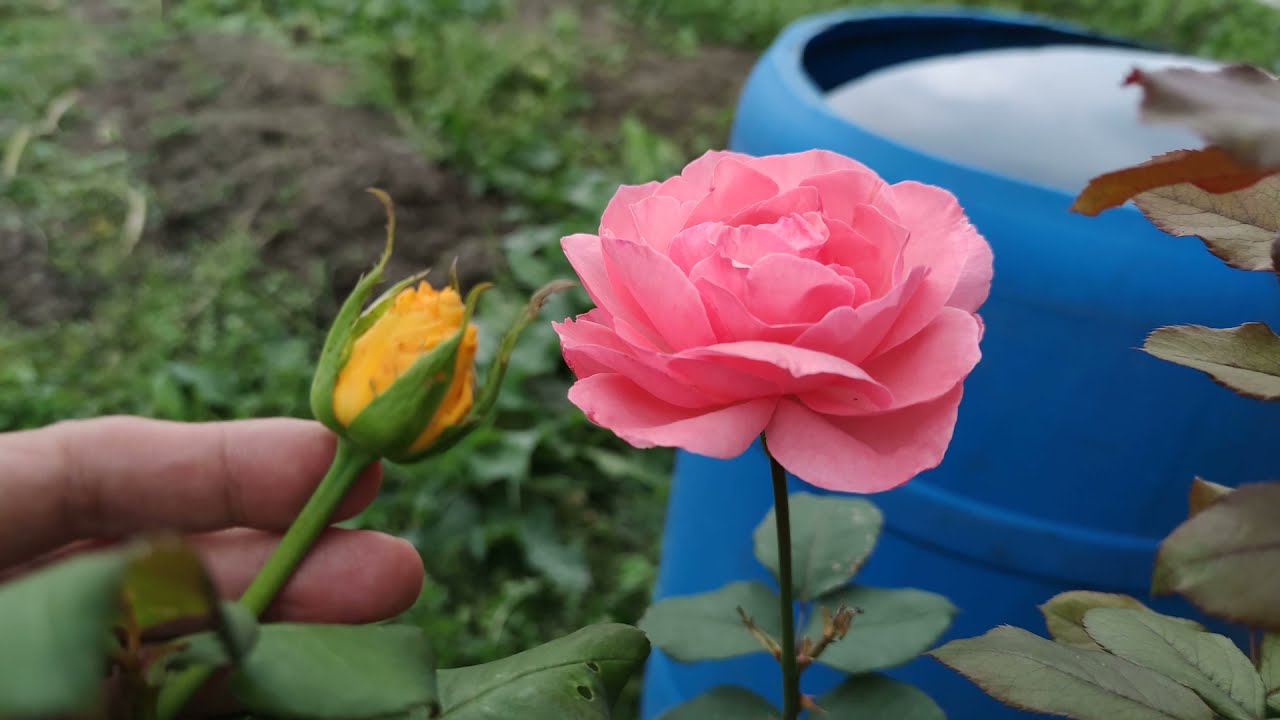
It seems like a job for professionals, in fact anyone can do it: see how to graft a rose, but with other varieties.
To graft a rose, everyone believes that an experienced gardener must do everything. In reality, it is a simple action following a few small tips. Grafting a rose is certainly not easy, but once you understand all the steps that need to be taken, it will be wonderful to see flowers of other varieties grow. A completely natural creation, without having to buy other types or waste time.
Grafting a rose: how to do it with other varieties
Grafting a rose from other varieties is not difficult, but you need to follow all the basic steps. The results are not immediate, but the satisfaction is certainly worth considering. Grafting joins two plants of different varieties, giving life to a plant that is unique in its kind.
First of all, it is important to choose the rootstock , which is essential for carrying out the action. Experienced nurseries recommend opting for a rosehip with multiflora rose, especially if it is the first time.
The wild rose has robust roots and does not require much care, adapting to any type of soil. Not only that, it is actually a perfect grafting support. Multiflora has shallow roots that are perfect for this type of addition.

To obtain the rootstock, the seeds of both varieties are buried or constructed from cuttings. To do this, first take the two branches of about twenty centimeters long in winter , and then plant them in summer and you will have your own seedling.
Curiosity and advice
Before proceeding with the grafting, it is necessary to obtain the necessary tools, such as disinfected scissors and ligation materials. In addition, the operation should only be carried out if the outside temperature is 25 degrees.
First of all, the cutting is cut with the necessary tools, trying to make a perpendicular cut and not clean. Before doing this, it is good to remove the leaves and thorns , so that it works even better. Now attach the detached part to the rootstock. Once obtained, it will be possible to bind it with raffia or another light material, which will cover the cut made previously.
After a month you will be able to see the result by removing the raffia to check the condition of the graft.
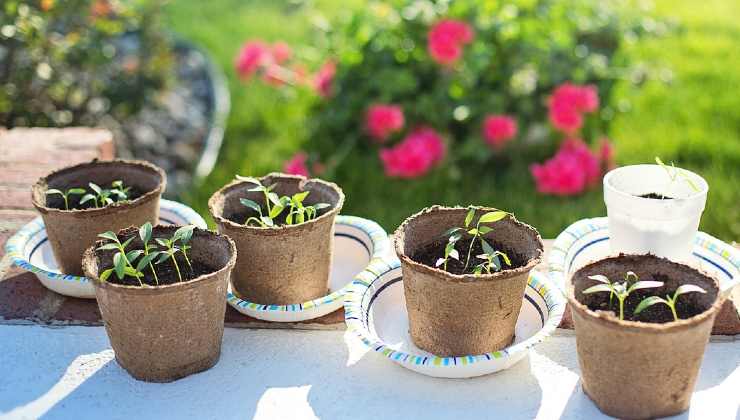
It is time to proceed with the most important operation . During the month of February the rootstock will be cut at the tip of the graft itself. In the spring you will see the first shoot and wait until it reaches fifteen centimeters. It will have to be trimmed and then the wild shoots around the structure will be eliminated.
Always ask a professional nurseryman for advice, as not all roses are suitable for this operation.