
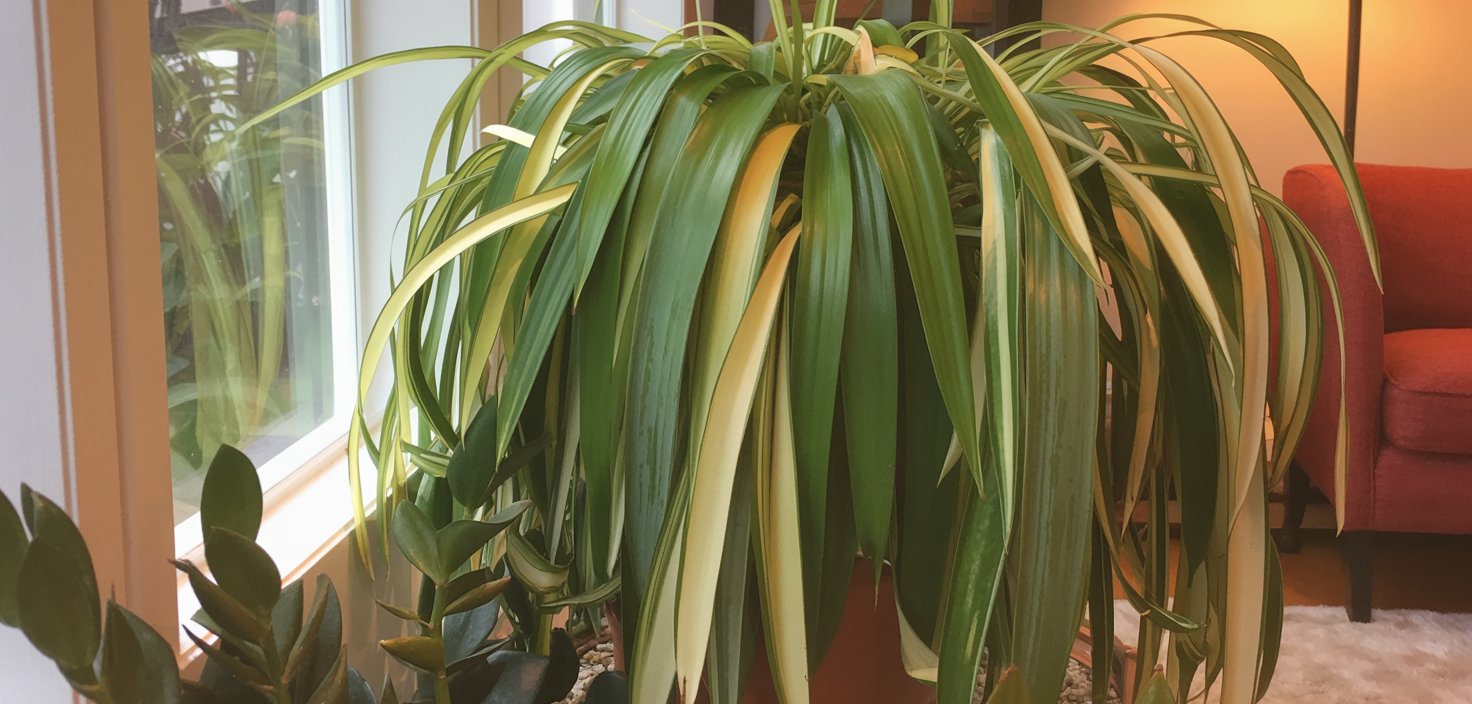
The Spider Plant (Chlorophytum comosum) is a staple in many households thanks to its air-purifying abilities. However, if yours is looking a bit sparse or tired, don’t despair. With these tips, you can transform it into a green cascade that will be the envy of everyone.
Here is how to do it:
1. Light is Key (But No Sunburn!)
Spider plants love bright but indirect light.
- Ideal: An east or west-facing window.
- Caution: Direct midday sun will scorch the leaves. Conversely, if it has too little light, the plant will become spindly and thin.
2. The Soil Must “Breathe”
Heavy soil is the enemy.
- Use a loamy potting mix with a neutral pH ($6.0–7.0$).
- Tip: Mix some perlite into the substrate to keep it airy. This ensures the roots get oxygen and won’t rot. The pot must have drainage holes!
3. Watering: Less is More
The spider plant has thick, tuberous roots that store water.
- The Rule: Let the top layer of soil dry out between waterings. Use your finger to check!
- Water Quality: Use distilled, rainwater, or let tap water sit out overnight. Fluoride and salts in tap water often cause brown leaf tips.
4. Temperature and Drafts
It thrives in standard room temperatures ($15–27°C$).
- Protect it from cold drafts and the hot air coming from radiators. Temperatures below $10°C$ can damage the plant.
5. Humidity vs. Brown Tips
Spider plants are tropical, so they love humidity (around 60%).
- If your indoor air is dry, the leaf tips will turn brown.
- Solution: Mist the plant with a spray bottle, place it on a tray with wet pebbles, or give it a lukewarm shower occasionally to wash off dust.
6. Fertilize with Caution
Don’t overdo it. Too much fertilizer will cause the leaves to turn brown.
- Fertilize only in spring and summer, a maximum of 2–3 times a year, using half the recommended dose of standard liquid houseplant fertilizer.
7. Regular Pruning
Don’t be afraid of the scissors.
- Snip off any dry, yellow, or damaged leaves at the base. This allows the plant to redirect its energy toward new, healthy growth. Make your cuts at a 45-degree angle.
8. Repotting: It Likes a Tight Fit
Spider plants actually grow better when their roots are slightly “crowded.”
- Only repot when you see roots growing out of the drainage holes or if the soil dries out too quickly. The new pot should only be 2–5 cm wider than the current one.
9. Rotate for Symmetry
Plants reach toward the light.
- To prevent your spider plant from growing lopsided (thick on one side and bare on the other), rotate the pot a quarter turn every week.
10. Propagation for Extra Density
This is the best trick for a full, bushy look!
- When the plant sends out runners with tiny “babies” (spiderettes), let them root in water.
- Pro Tip: Instead of planting them in new pots, tuck the rooted babies back into the same pot as the mother plant. This will instantly fill in any bare spots!